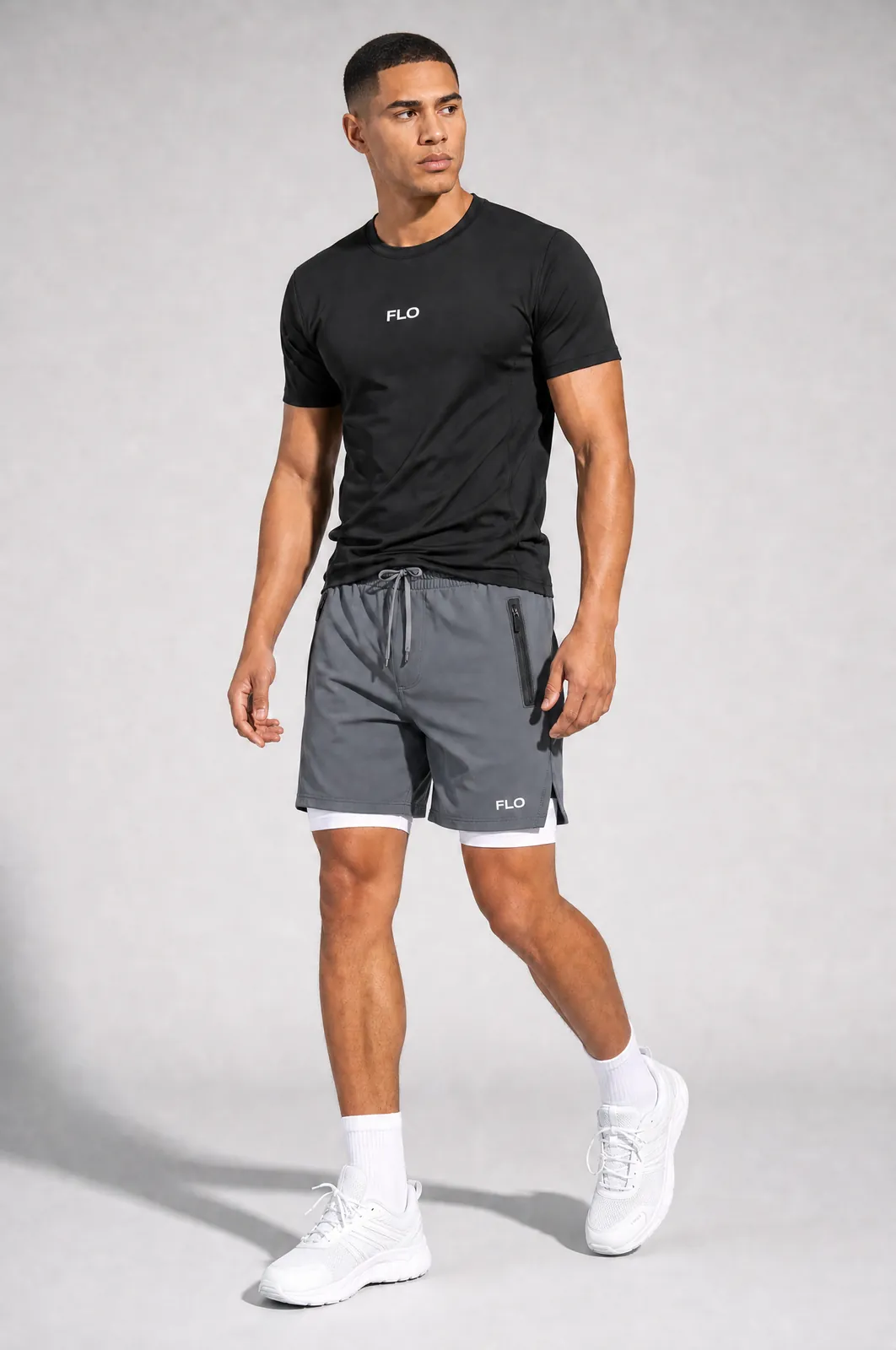
Fabric & Care
Nylon vs Polyester vs Cotton: The Activewear Fabric Guide
How nylon, polyester, cotton and elastane feel and behave, and which to wear when.
Look at the label on any activewear piece and you will see some mix of nylon, polyester, cotton and elastane. Each one behaves differently with sweat, heat and stretch. Knowing the basics helps you choose the best fabric for activewear for how you actually move.
The short answer
There is no single best fabric. For sweaty training, a synthetic blend with elastane usually works best. For low-intensity days and lounging, cotton blends feel softer. For pieces that need to hold a shape, like jackets and skirts, a smoother structured synthetic is a good choice.
Nylon
Nylon (also called polyamide) is a strong, smooth synthetic fibre. It has a soft, slightly cool hand-feel and takes colour well.
- Strong and hard-wearing, with good resistance to rubbing.
- Smooth against the skin.
- Can be knitted densely, which helps with opacity.
- Dries quickly.
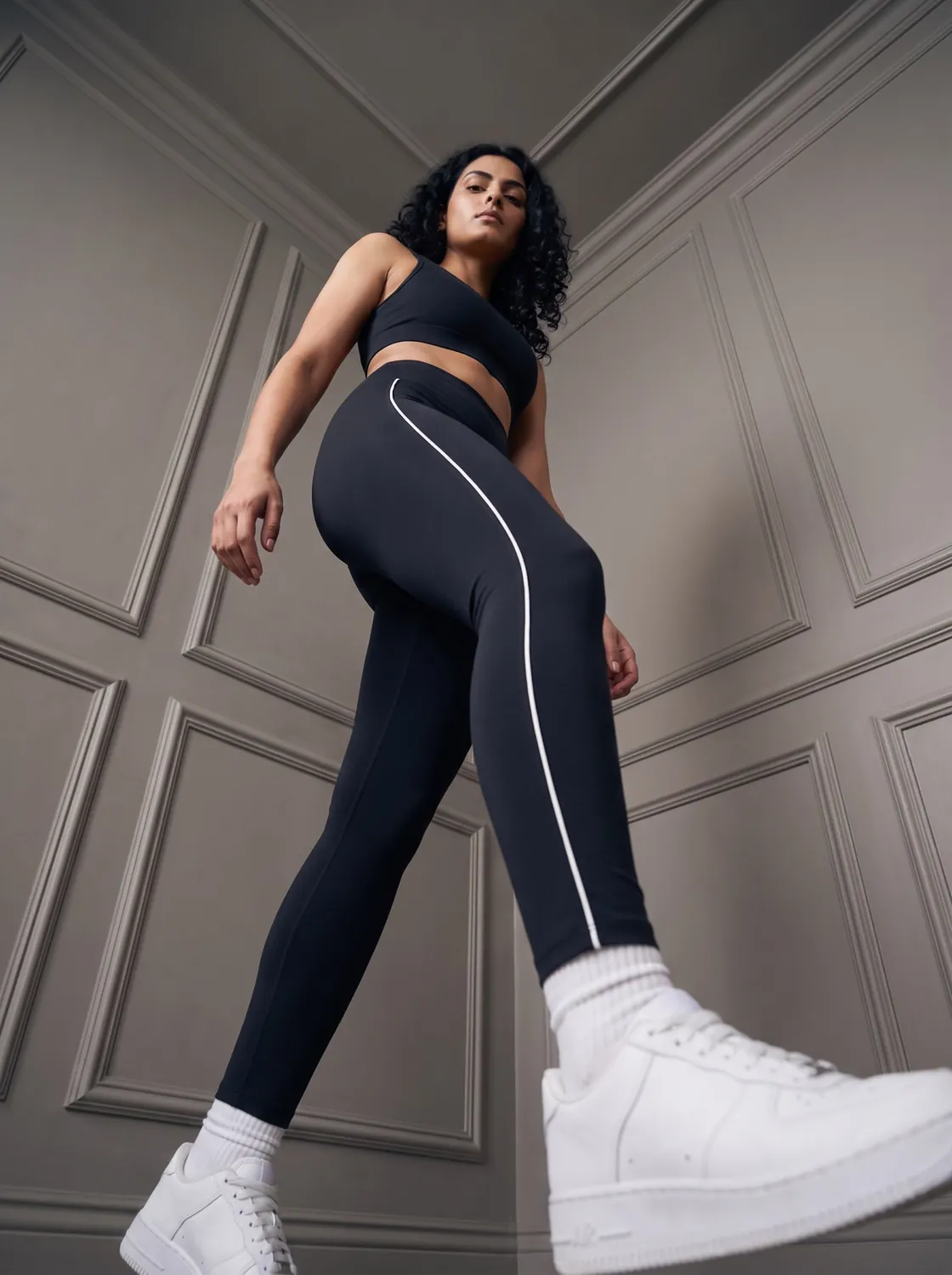
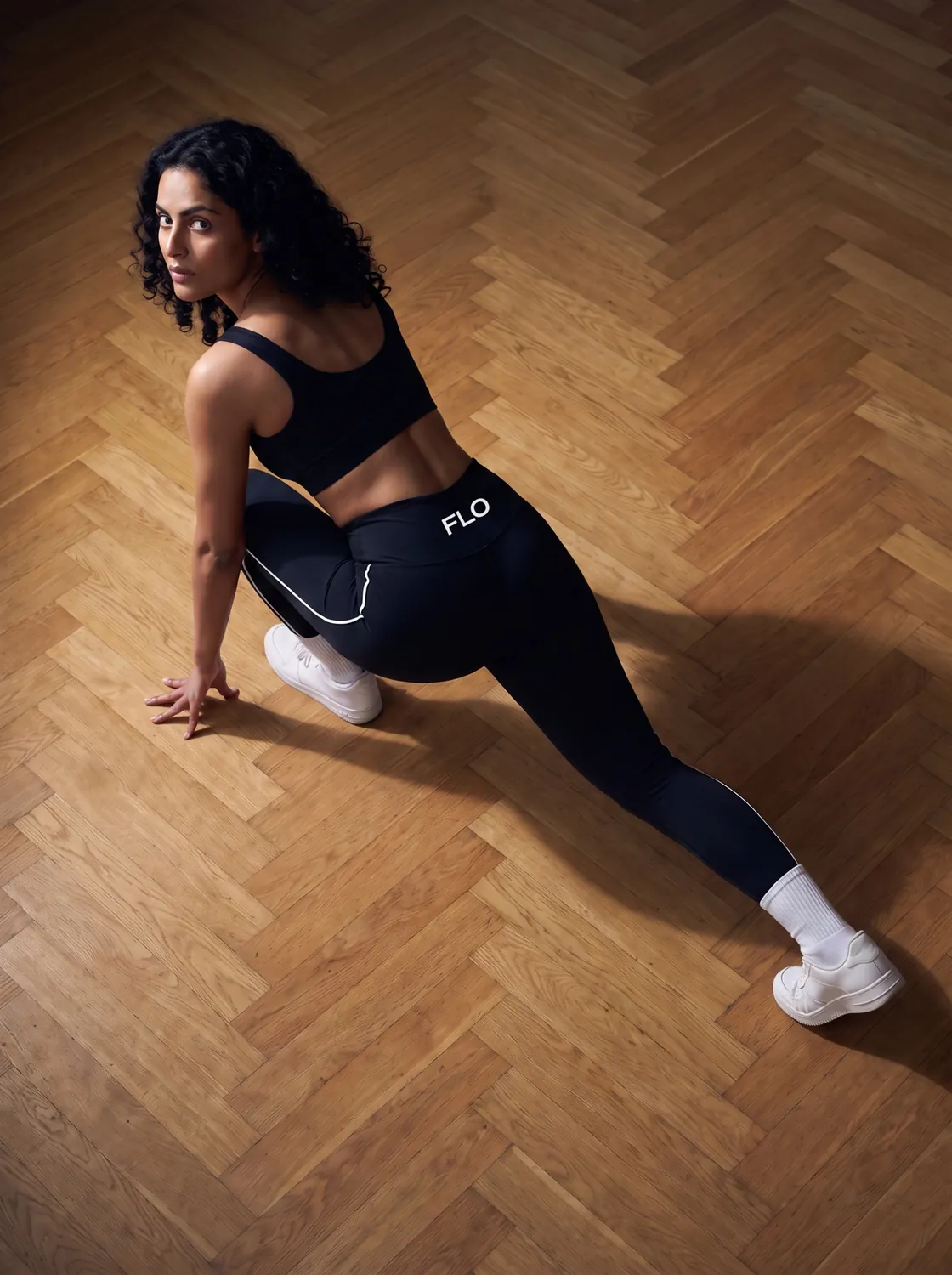
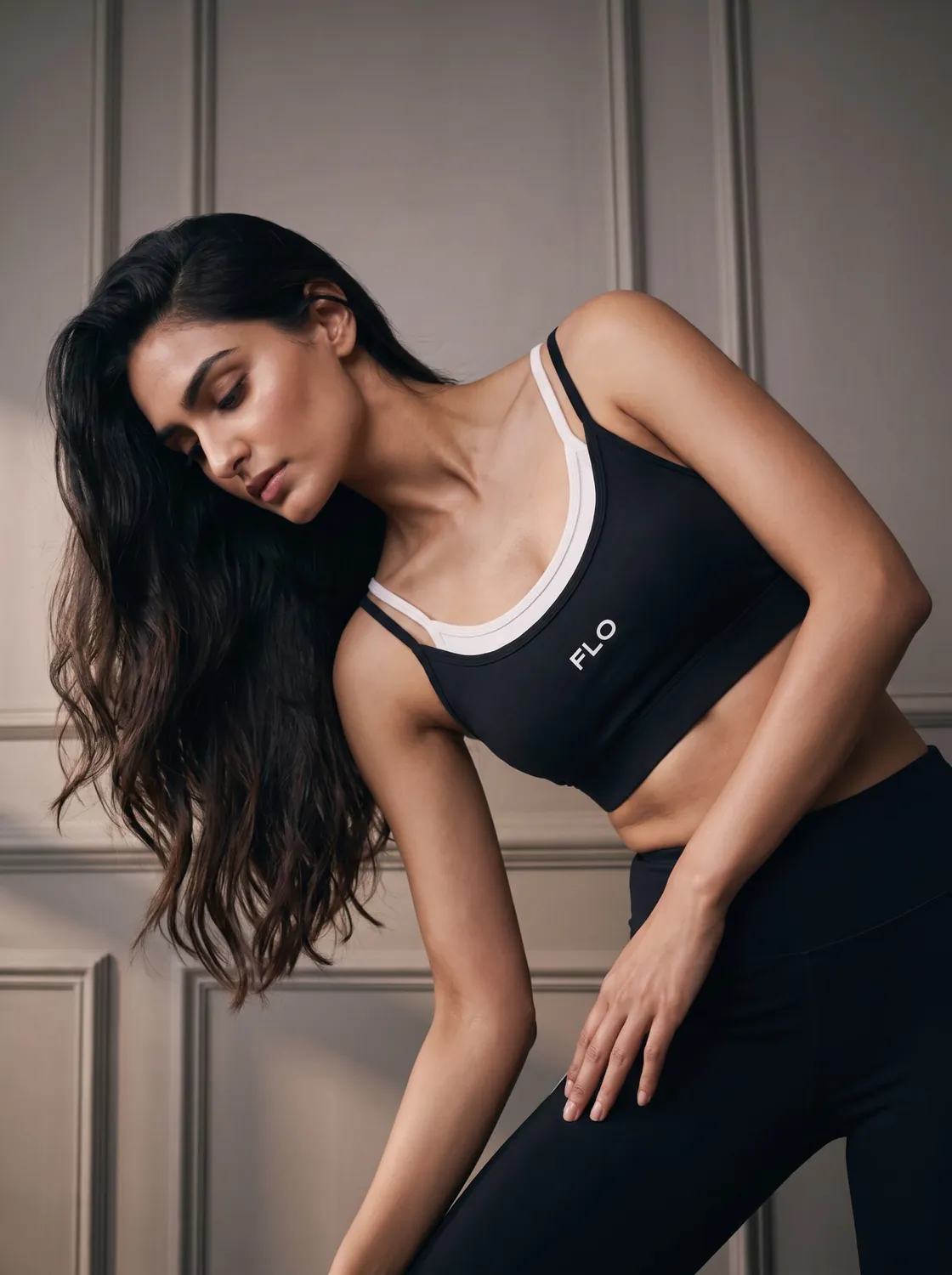
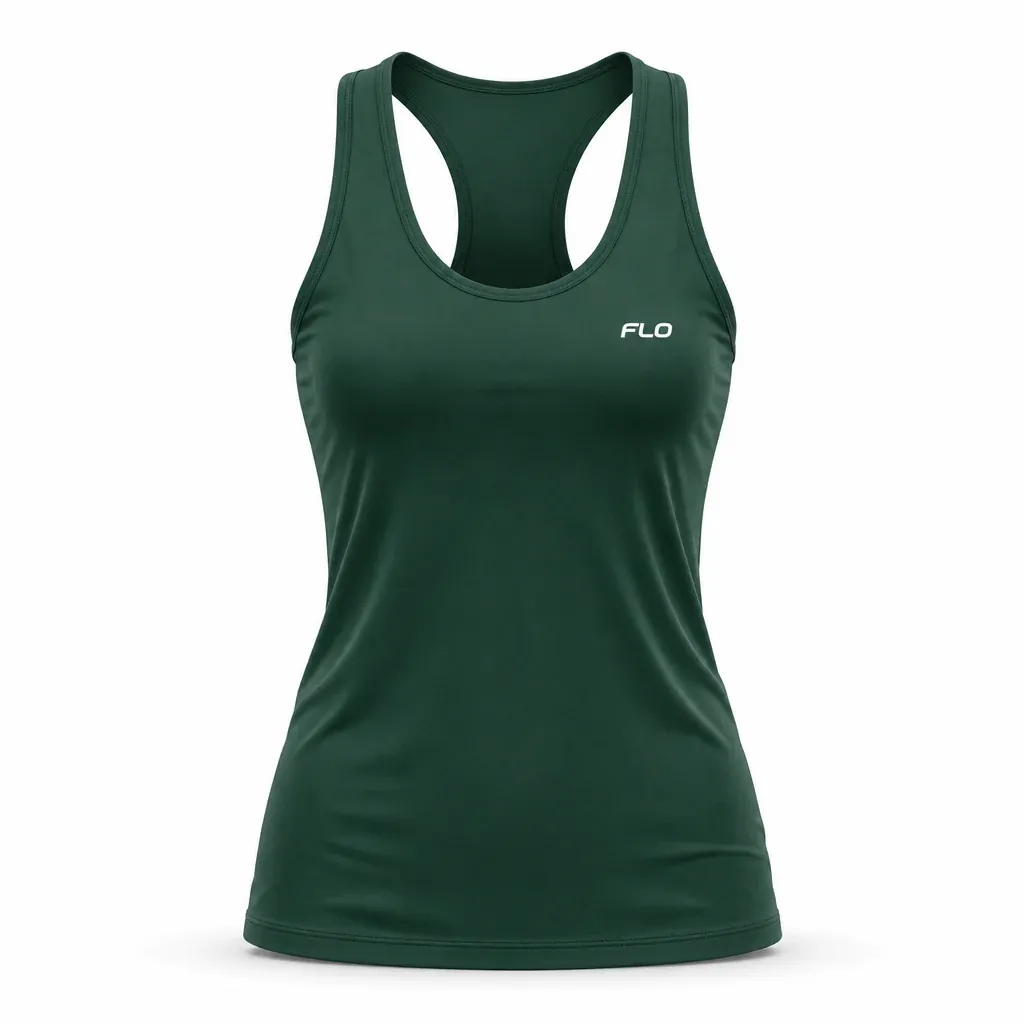
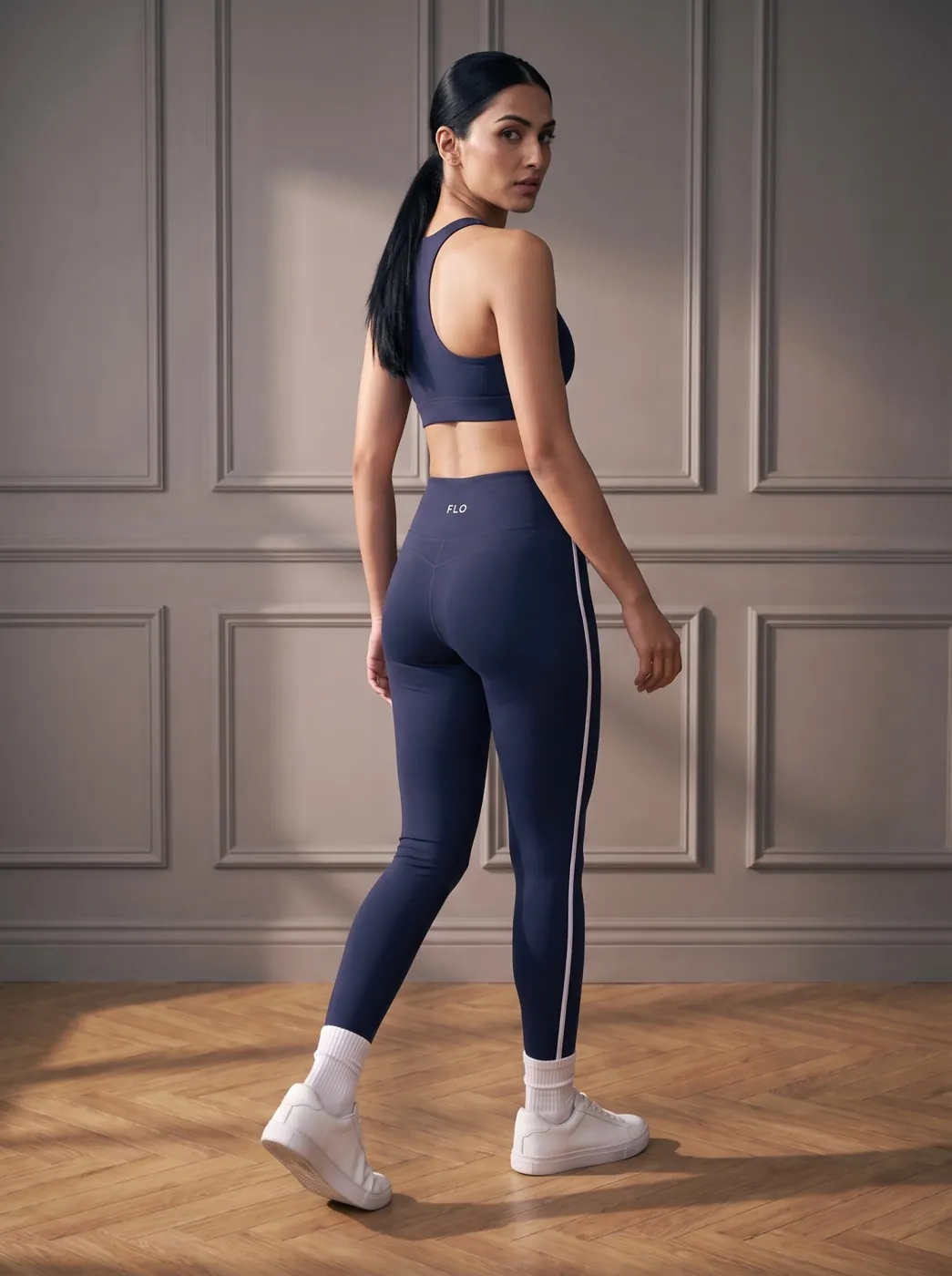
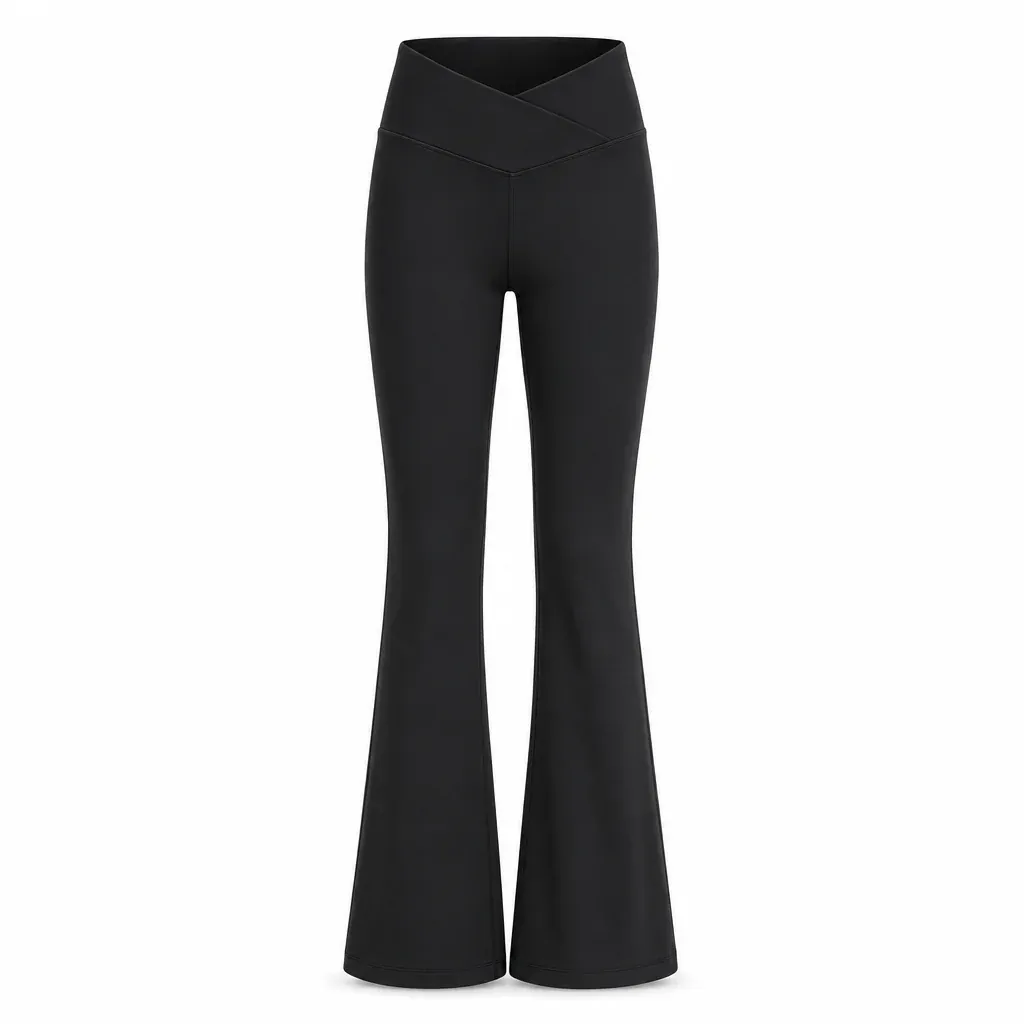
Our performance core is 95% nylon and 5% elastane. We use it for leggings, flare pants, sports bras and tanks because it offers four-way stretch, squat-proof opacity and quick drying.
Polyester
Polyester is the most common synthetic in sportswear. It is light, durable and holds its colour well.
- Lightweight and quick-drying.
- Holds colour and resists fading.
- Can feel less soft than nylon, depending on the finish.
- Can hold on to odour if washed hot or with softener.
It is a common choice for running tops, team kits and lightweight shorts.
Cotton
Cotton is a natural fibre. It is soft, breathable and familiar. It also absorbs water and holds it, which is the key thing to know.
- Soft and comfortable for daily wear.
- Breathable in dry heat.
- Absorbs sweat and stays wet, which can feel heavy and cold after a hard session.
- Can lose shape and bag out without a little stretch added.
Cotton is great for warm-ups, travel, lounging and the rest of the day. For intense, sweaty training, especially in humid Indian weather, a synthetic usually feels better.
Elastane (spandex, Lycra)
Elastane is the stretch. It is almost always blended in small amounts with another fibre. Even a few percent makes fabric stretch and snap back into shape. It is also the most delicate part of the blend: heat, chlorine and softener wear it down. See our activewear care guide for how to protect it.
How FLO uses fabric
We built a small fabric system so each piece has a job:
- Performance core, nylon-spandex: our second-skin training fabric. Four-way stretch, squat-proof and quick-drying. Used in leggings, flares, sports bras and tanks.
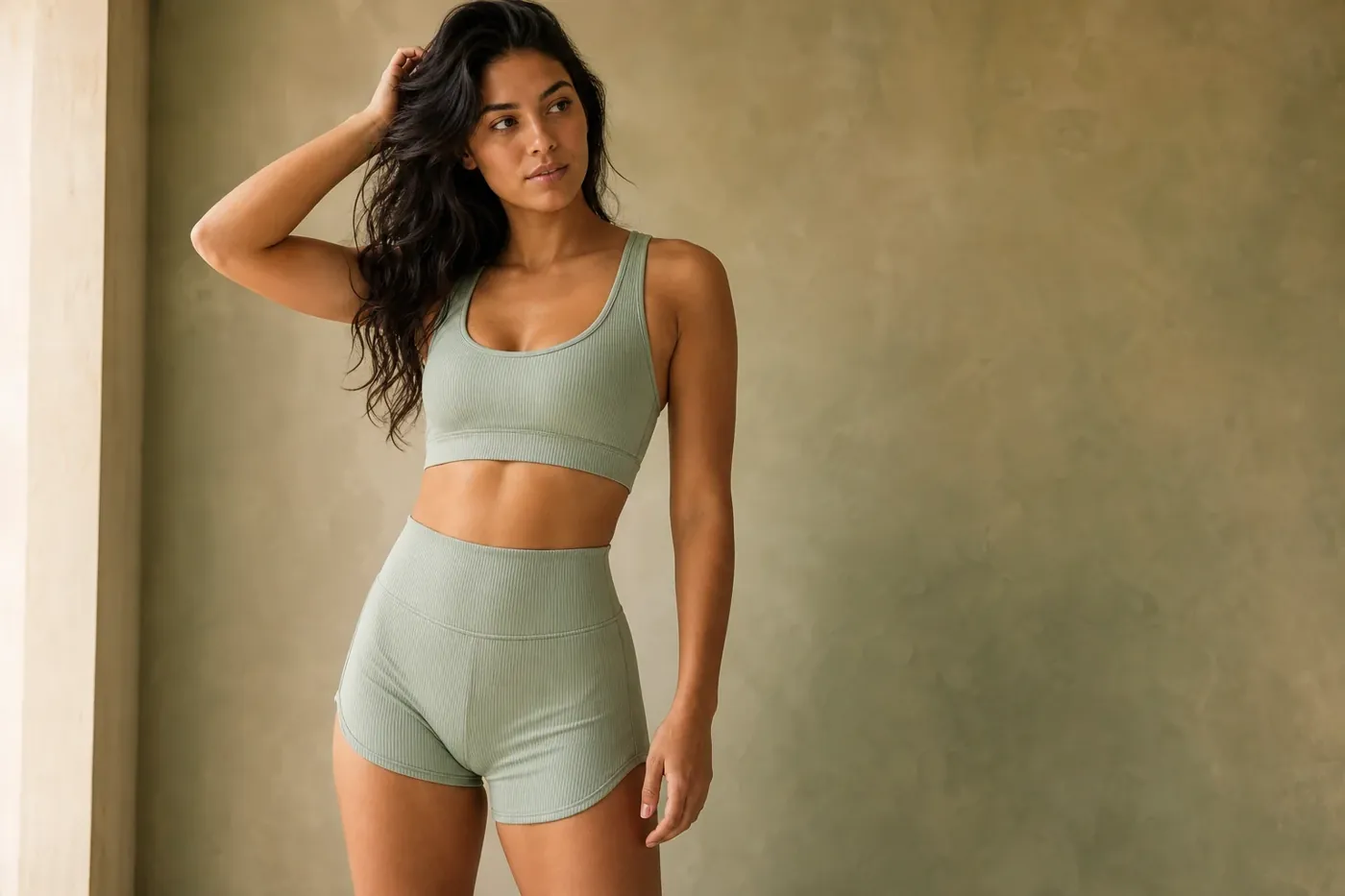
- Soft core, cotton-spandex: a brushed, breathable fabric with just enough stretch. Used in sweats, tees and pieces made for the rest of the day.
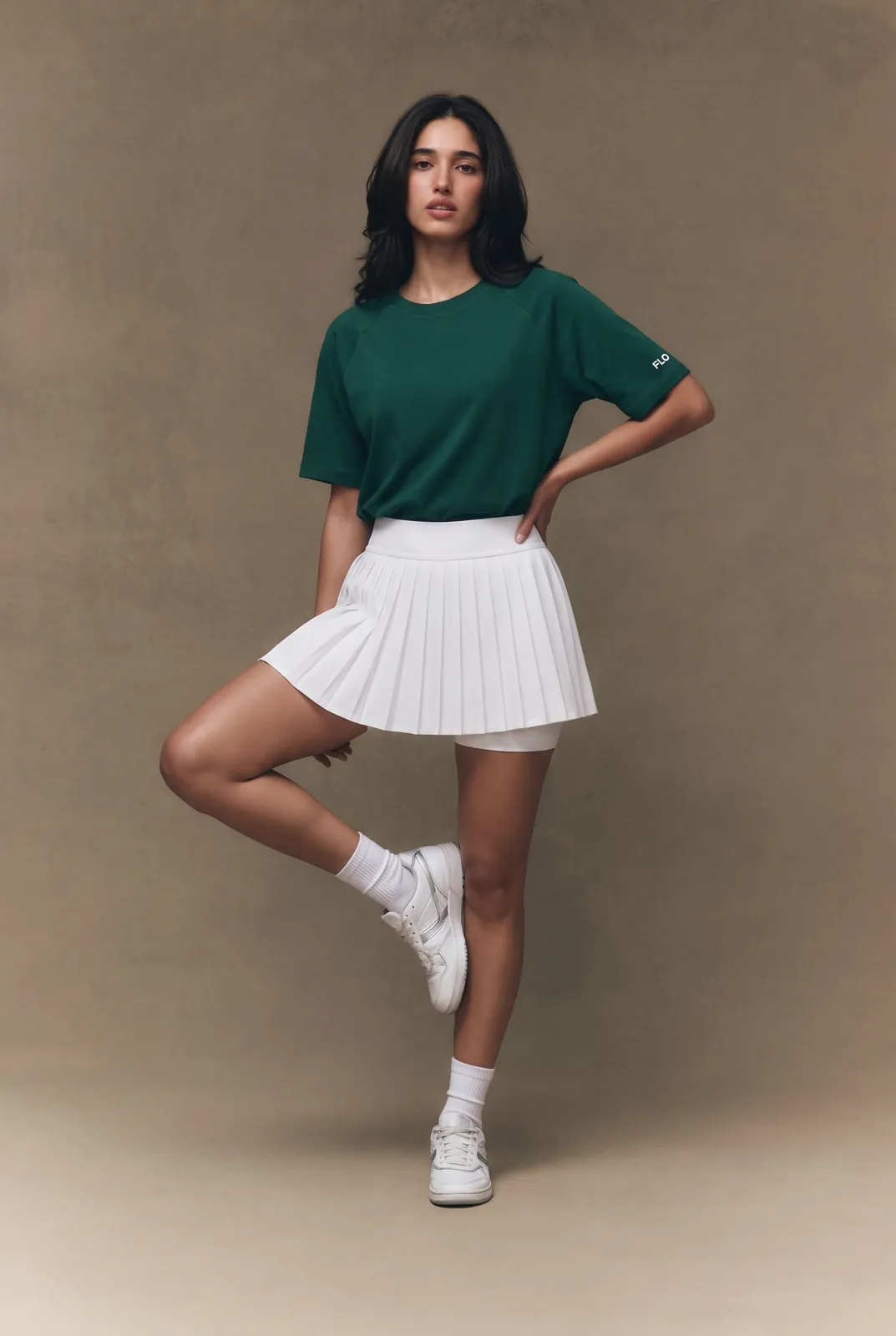
- Structured, polyamide: a smoother, crisper fabric that holds its shape. Used in jackets, half-zips, tennis skirts and training shorts.
Which fabric for which activity
Running, HIIT and strength
Choose a synthetic blend with elastane. It moves with you, dries quickly and does not get heavy. Try the Crossover Flare Pant or Contrast Stripe Legging.
Pilates, yoga and barre
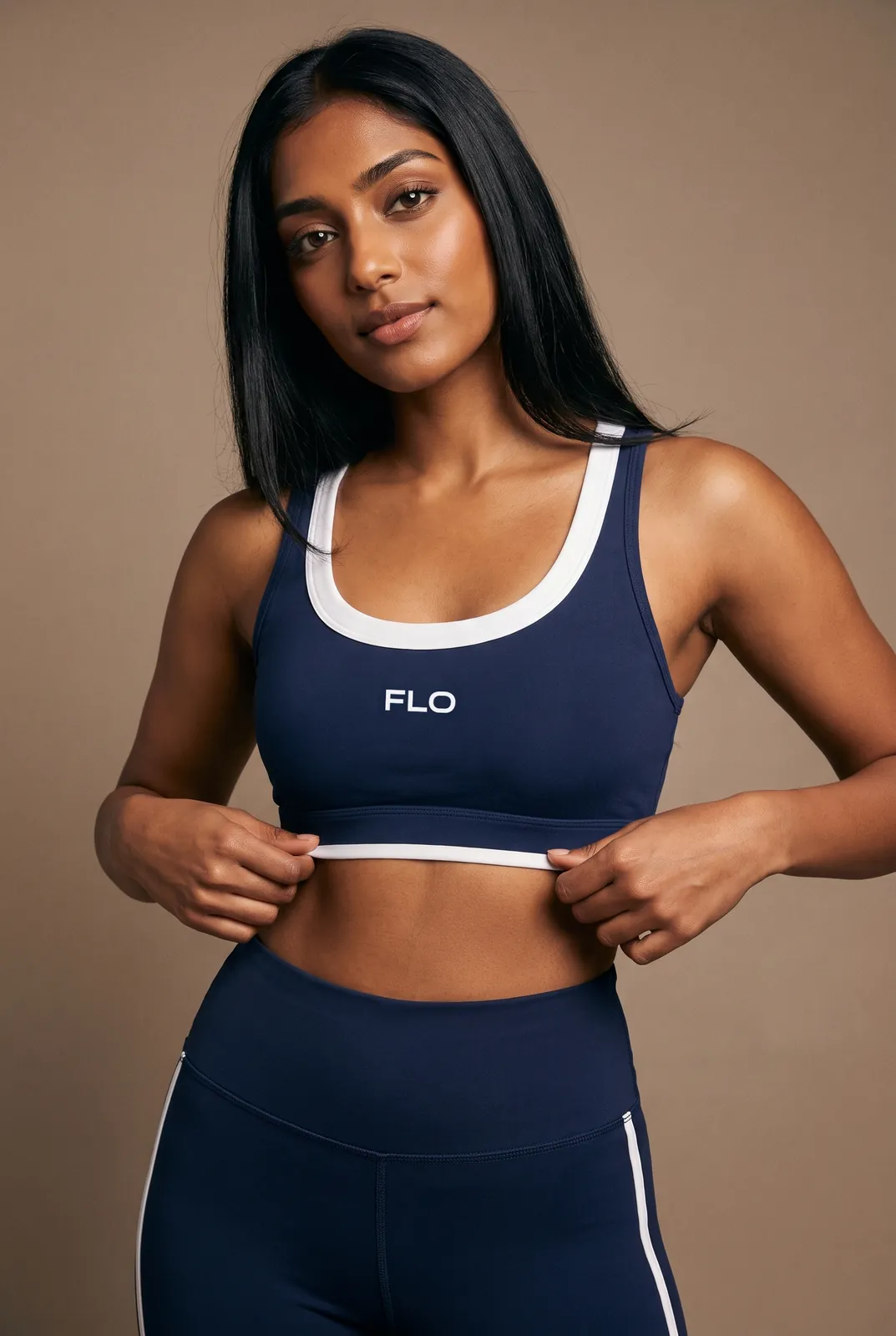
Stretch and opacity matter most. A dense nylon-spandex is ideal. The Contrast Set covers both pieces.
Tennis and padel
You want stretch for the body and structure for skirts and shorts. Our tennis skirt uses structured polyamide.
Rest days, travel and lounging
Soft cotton-spandex. The Wide-Leg Sweatpant in Chocolate is made for these days.
Fabric and Indian weather
In dry heat, as in a Delhi May, breathable fabrics and light colours help. In humid heat, as in Mumbai or during the monsoon, quick drying matters more than anything, because sweat does not evaporate easily. That is where synthetics with good wicking beat cotton. We go deeper in Activewear for Indian Summers.
Common fabric myths
‘Cotton is always the most breathable’
Cotton breathes well when it is dry. Once it is soaked with sweat, it stops breathing well and stays wet. In humid weather, a quick-drying synthetic often feels cooler over a full session.
‘Thicker leggings are always more opaque’
Opacity depends on how densely the fabric is knitted, not just how heavy it is. A dense, mid-weight nylon-spandex can be more opaque than a thick, loose knit. Our squat-proof leggings guide explains how to test a pair.
‘Synthetic fabrics always smell’
Synthetics hold odour mainly when they are washed in hot water, with too much detergent or with fabric softener. Washed cold and dried well, they stay fresh. Washing soon after a session helps most.
‘More stretch is always better’
Stretch is good, but recovery matters just as much. Fabric that stretches easily but does not snap back will bag at the knees. Look for a blend that feels supportive when you pull it, not just soft.
Reading a label
When you shop, check three things: the fibre blend, the percentage of elastane, and the care label. A higher elastane share usually means more stretch and compression. A care label that says cold wash and line dry is a good sign the maker expects the piece to last.